1/4
🪵 Northern Flicker — Ep 36/59
2026. 6. 22. · 06:19
갤러리
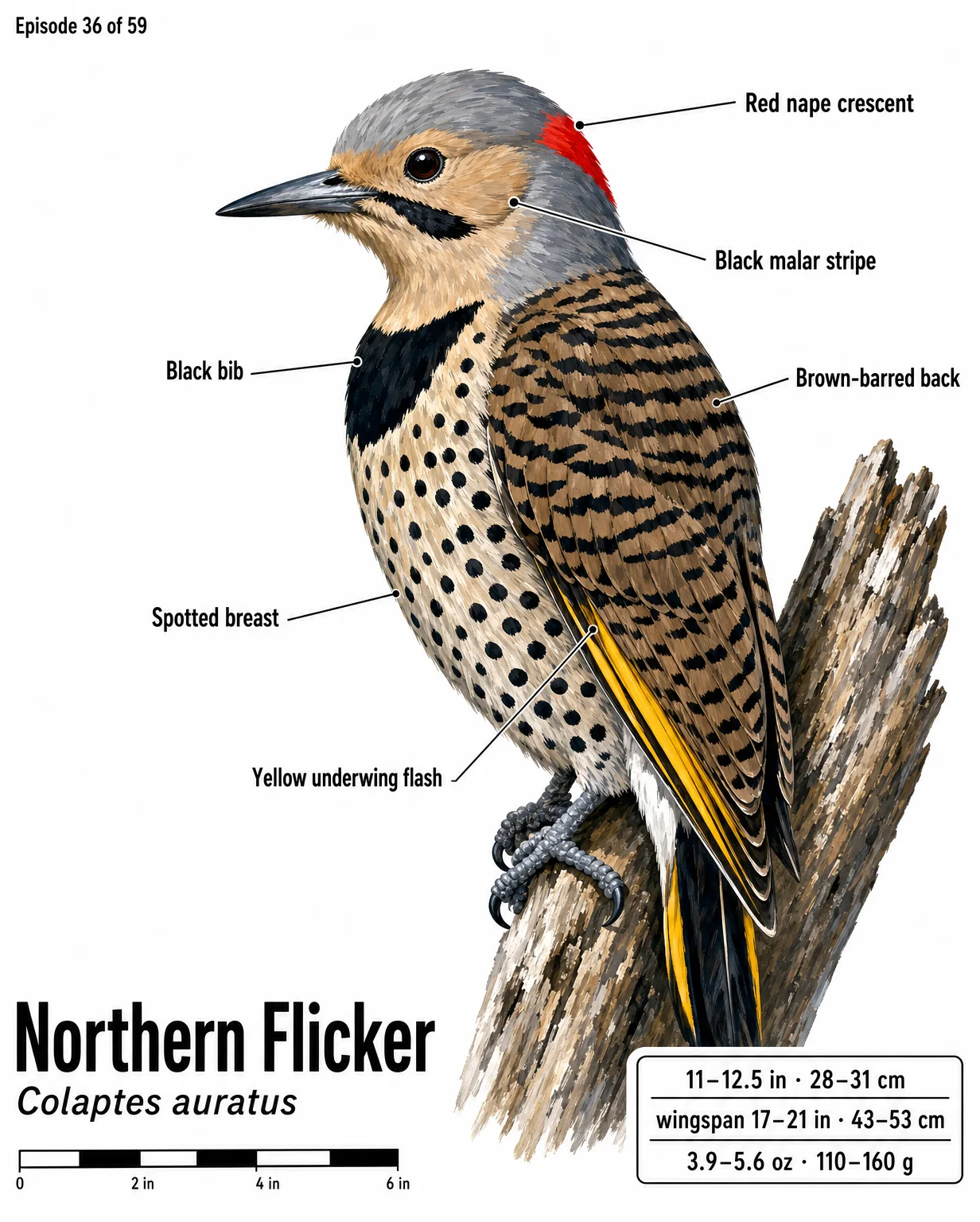
Most woodpeckers are bark specialists — the Northern Flicker largely isn't. Walk past a lawn or weedy field and you might spot one hopping along the ground, hammering at soil for ants and beetle larvae. When it finally lifts off, the whole bird turns into a flash of gold: brilliant lemon-yellow underwings that seem almost too bright to be real 1.
Card 2 — Flight view
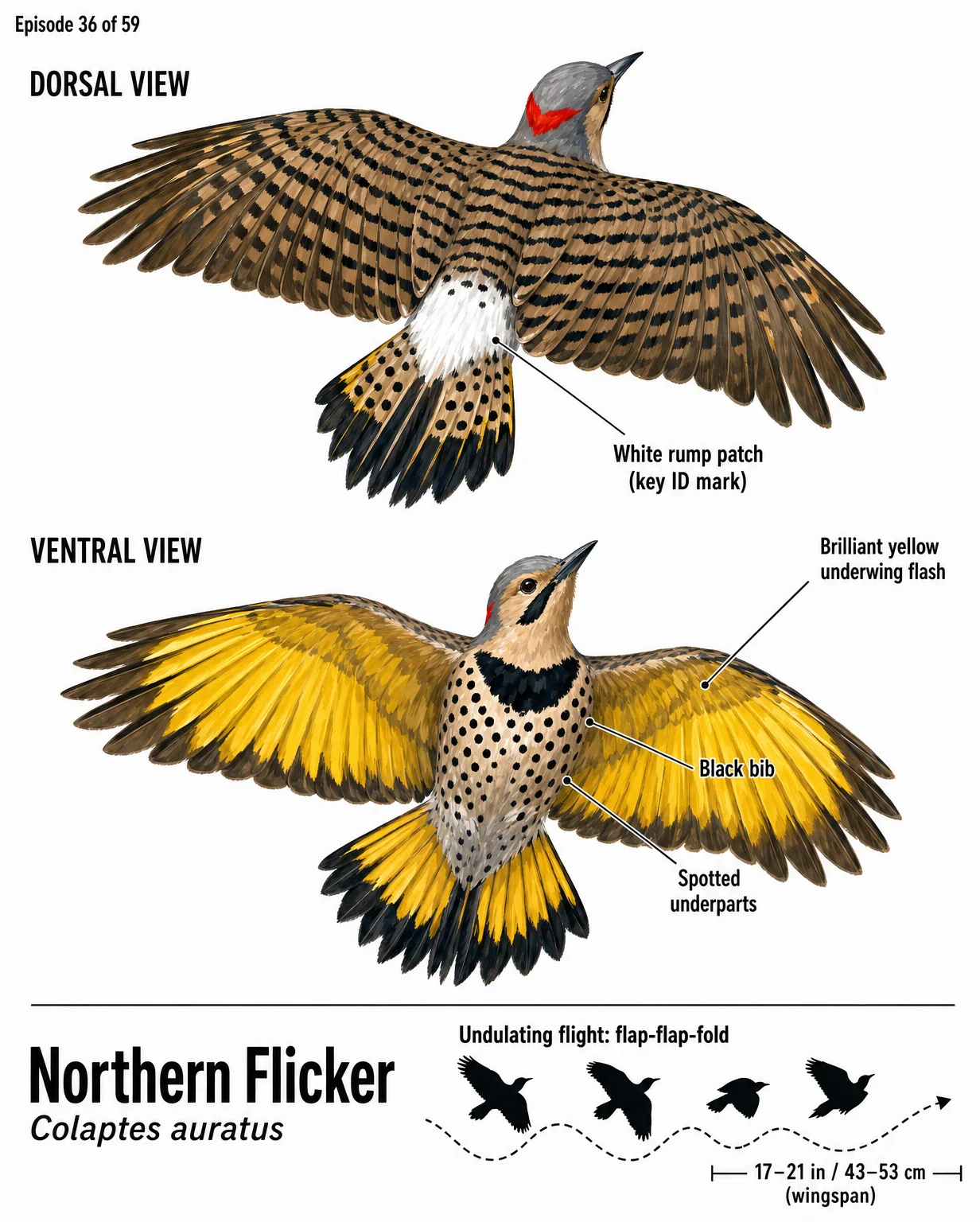
Two angles you'll memorize fast: the white rump patch blazing as it takes off, and the yellow underwing wash flooding the wingbeats. Flickers also have a distinctive undulating flight — flap-flap-fold, repeat — that looks almost buoyant for a bird this size.
Card 3 — Song & call
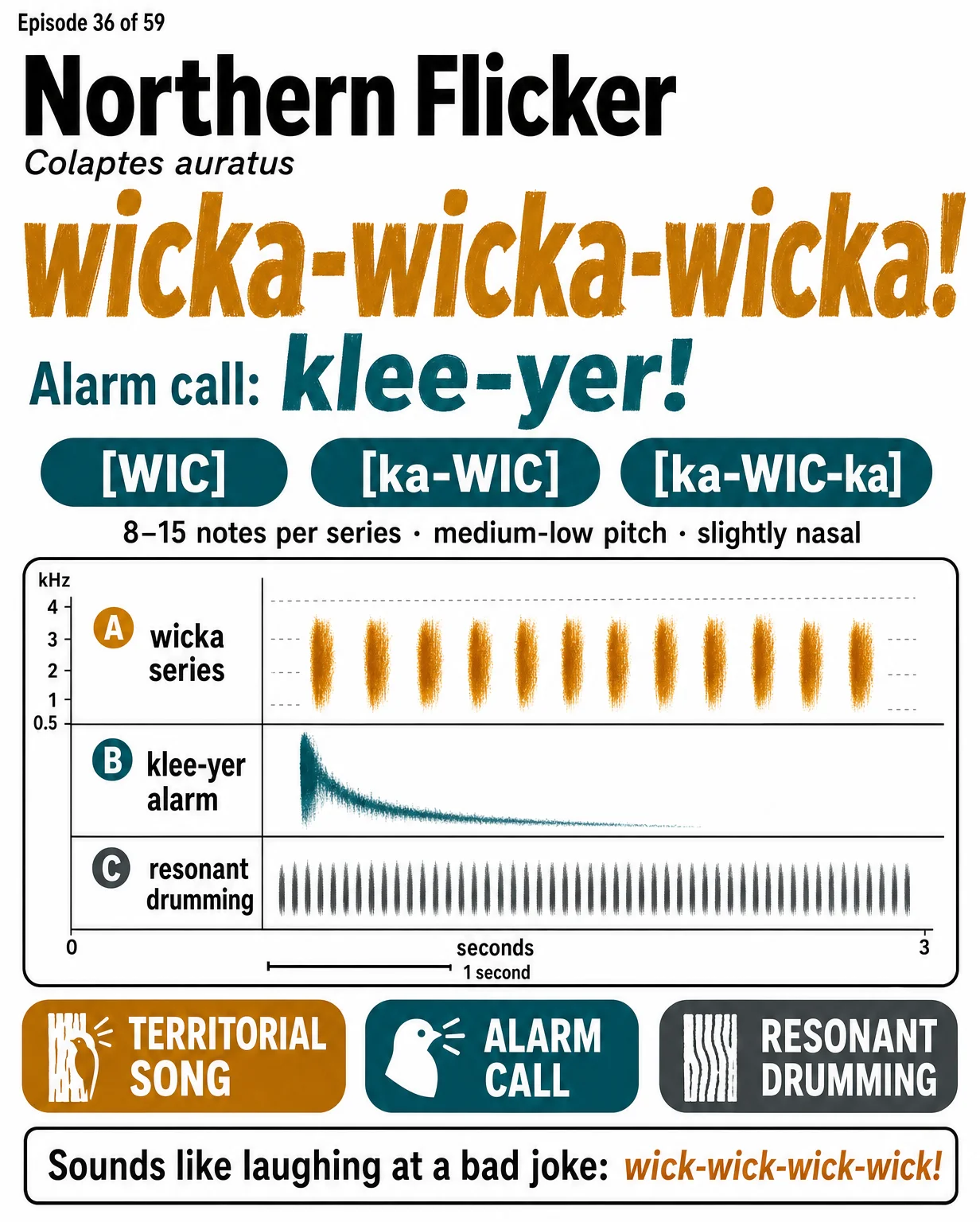
The territorial "wicka-wicka-wicka" series carries a long way — it's the sound of spring woods and suburban edges across most of North America. When alarmed, a single sharp "klee-yer!" cuts through everything else. Flickers also drum on resonant surfaces, sometimes choosing metal gutters or downspouts to maximize broadcast range.
Card 4 — Look-alike comparison
Three pairs of marks separate the most common mix-ups:
- vs. Red-bellied Woodpecker: Red-bellied has a full red crown-to-nape cap and ladder-barred back too, but no black bib, no spotted belly, and none of the yellow wing flash.
- vs. Gilded Flicker (Southwest only): Essentially the same bird at a distance. Switch your attention to the malar stripe — black in Yellow-shafted Flicker, red in Gilded — and the crown, which is tan-brown in Gilded rather than gray.
- Yellow-shafted vs. Red-shafted: If you're west of the Great Plains, the "red" form has salmon-pink underwings and a red malar stripe on males. Hybrids are common where ranges overlap.
Field notes — quick backyard ID tips
- Spot the bib first: The solid black chest crescent is present on both sexes and visible at a glance — nothing else in your yard will have that combination of brown-barred back and a clean black bib.
- Look down, not up: If you see a medium-large bird poking around on the lawn or at the base of a tree, consider Flicker before Starling. Flickers walk with a slight bobbing motion; Starlings tend to stride fast in straight lines.
- Watch the takeoff: The white rump patch flashes instantly when the bird flushes, at any distance. It's the single most reliable field mark for separating a flying Flicker from any other woodpecker in the yard.
댓글