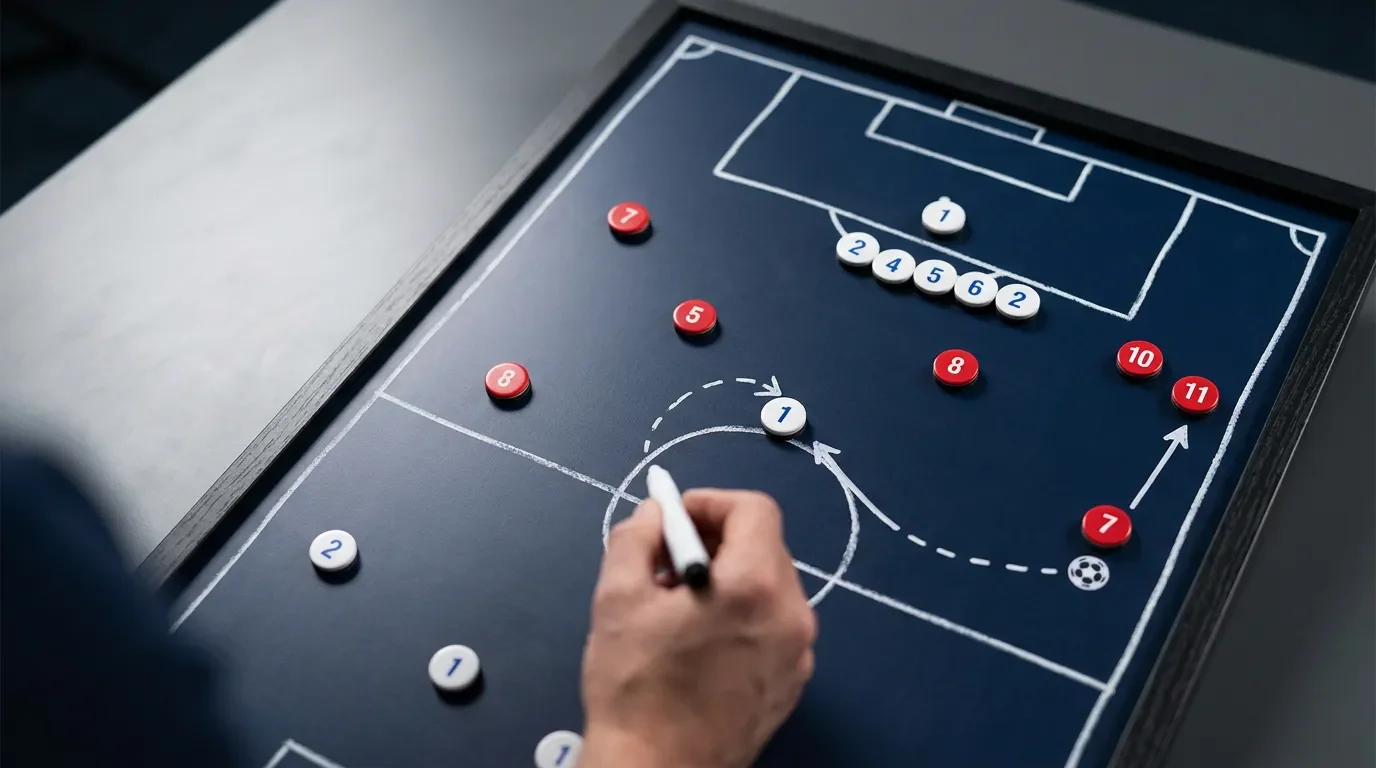
The Türkiye game is a set-piece lab now
The USA has already won Group D, so the Türkiye match should not be another generic rhythm exercise. This tactical brief argues that Pochettino's best use of the finale is a controlled restart rehearsal before the Round of 32 opponent is known.

The U.S. already owns the part of Group D that matters. Paraguay's 1-0 win over Türkiye confirmed the Americans as group winners, while Türkiye's second loss left it eliminated before the June 25 finale in Los Angeles. 1
That makes Türkiye less about proving the starting XI and more about rehearsing the thing that can decide a knockout match before anyone has a chance to settle in: restarts.
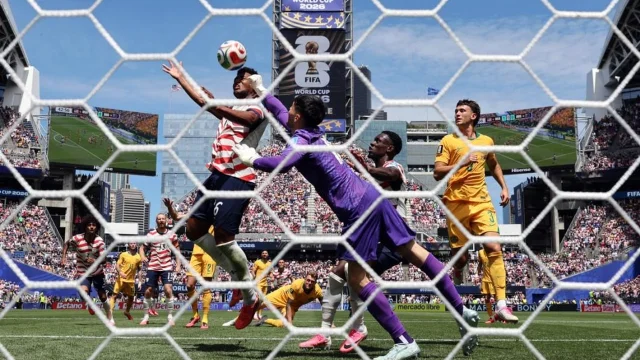
The Australia win gave Pochettino the hint. The U.S. faced a compact low block, took seven corners, put only two shots on target, and still found the second goal through a right-side free-kick sequence that ended with Alex Freeman heading in from close range. 2 If the final group game is now a controlled rehearsal, the dead-ball plan should be near the top of the checklist.
Why this is the right experiment
Open play has already given the U.S. several useful answers. Against Paraguay, Pulisic set up Balogun's 31st-minute goal, Malik Tillman released Balogun for the stoppage-time brace, and Gio Reyna added the late fourth from Freeman's pass. 4 Against Australia, Balogun's channel run forced the own goal before Freeman's header created breathing room. 2
The pattern is encouraging, but it also says something about knockout prep. The U.S. has generated threat from wide runs, second balls, and late runners. Restarts let Pochettino stress the same habits without turning Türkiye into a 90-minute chase for rhythm.
That matters because Christian Pulisic's minutes are still the obvious unknown. He did not dress against Australia while progressing back from a leg injury, and Ricardo Pepi came into the XI in his place. 5 If Pulisic is limited or held back again, the staff can still test who owns corners, who takes the short free kick, and who attacks the second phase when the first delivery is cleared.
The four restart questions Türkiye can answer
| Test | What to watch | Why it matters |
|---|---|---|
| Right-side free kicks | Does the U.S. repeat the short routine that led to Freeman's 43rd-minute header, or vary it with a direct delivery? 2 | Freeman's goal came from a right-side free kick, not a random scramble. The staff should find out whether that action has a second version. |
| Corner volume | Can seven corners turn into better first contact and cleaner second balls? 2 | Australia survived the corners themselves. Knockout opponents will study the first delivery, so the rebound plan matters. |
| Pulisic-off delivery | Who takes the left-side and right-side service if Pulisic is managed again? 5 | A knockout set piece cannot depend on a player whose minutes are still being managed. |
| Rest defense | How many players stay behind the ball after corners and wide free kicks? 2 | The U.S. allowed only five Australia shots, but the next opponent may be faster in transition. |
The balance is delicate. If Pochettino strips out too many starters, the rehearsal loses timing. If he uses the full first XI, the match stops being a rehearsal and becomes an unnecessary risk. The best middle ground is not a fixed lineup. It is a fixed set of assignments: first runner, back-post runner, goalkeeper-screen player, edge-of-box shooter, and two players responsible for killing counters.
The bracket makes repeatable habits more valuable
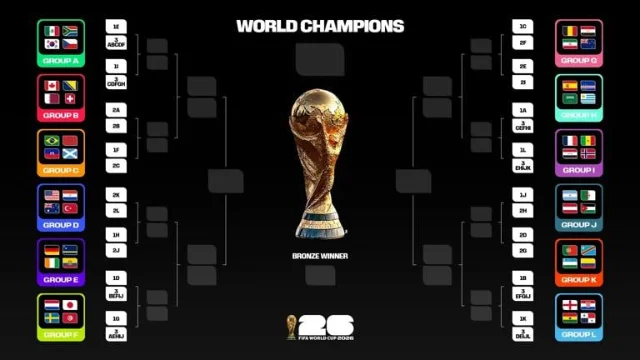
The U.S. knows the date and range of its first knockout opponent, but not the opponent. FIFA lists Match 81 as USA vs. a third-place team from Groups B, E, F, I or J at San Francisco Bay Area Stadium on July 1. 6 U.S. Soccer has said the same opponent range will not be settled until the end of group play. 2
That uncertainty changes the prep work. A scouting report can narrow the field, but a clean restart package travels across opponent types. It works against a third-place team that sits deep. It works against a team that presses and fouls wide. It works on a night when the game is tight and the crowd is waiting for one clean moment.
The Freeman goal is the template, not because Freeman must score again, but because the sequence had layers. Pepi helped win the free kick near the right end line. Dest's shot changed the angle. Freeman followed the ball and beat the goalkeeper to the drop. 2 That is the kind of messy, rehearsed pressure that survives when a knockout opponent takes away the first option.
The selection read
This should not be a full-strength continuity game. It should not be a pure reserve runout either. The useful version is a split squad built around restart units.
Keep enough of the spine on the field for timing. Give Pepi and Balogun at least one shared set-piece window if the staff still wants to study the two-striker look. Give Reyna or Tillman responsibility for second balls at the edge of the box. If Pulisic is unavailable or limited, do not wait until July 1 to decide who takes the first left-side corner.
The players have made clear they still want the third group win. Matt Freese said the focus shifts to beating Türkiye, and Antonee Robinson said the group wants to go into the knockout rounds with more confidence. 1 That is the right tone. The practical target is narrower: leave Los Angeles knowing the U.S. has two or three restart looks it trusts when the Round of 32 gets tense.
このコンテンツについて、さらに観点や背景を補足しましょう。